Memory Journal for Families: Capture Your Family's Story
A family memory journal is a living record of your family — the stories, traditions, funny moments, and meaningful experiences that define who you are together. Lieu & Legacy provides a structured, guided workspace for families to capture memories, answer life story prompts, and build a personal family archive that future generations will treasure.
Short answer
Start by identifying the information, memories, documents, or messages that matter for memory journal for families: capture your family's story. Organize them into clear categories, record where the current source is kept, and add enough context for a trusted family member to understand it. Keep passwords and unnecessary sensitive details in dedicated secure systems. Work in small sessions, confirm uncertain facts, and review the result after major family changes. This guide supports organization and communication; it does not replace legal, financial, medical, funeral, emergency, or other qualified professional advice.
Table of Contents
- •What to write in your family memory journal
- •Why family memory journals matter
- •Getting started with guided prompts
- •A practical way to begin
- •Examples for different families
- •How to keep the information useful over time
- •Privacy and access considerations
- •Building a reliable source index
- •Questions to ask during each review
- •How to involve family without creating pressure
- •Common mistakes to avoid
- •How LIEU Legacy helps
- •When to speak with a professional
- •A final completeness check
What to write in your family memory journal
Holiday Traditions
Annual celebrations, rituals, and the details that made each holiday special.
Family Firsts
First days, first homes, first jobs, and the memories attached to new beginnings.
Funny Family Stories
The stories that always come up at family dinners — captured in writing at last.
Family Home Memories
The sensory details of homes you grew up in or raised your children in.
Important Family Milestones
Weddings, births, graduations, and the moments your family grew and changed.
Everyday Details
The small, ordinary moments that become the most treasured memories over time.
Why family memory journals matter
Most family memories live only in people's minds — and when people pass, those memories disappear with them. A family memory journal creates a bridge across generations, preserving the stories, details, and personal history that would otherwise be lost. Even a modest journal with a dozen well-written entries is an invaluable gift to future family members.
- Preserves memories that would otherwise fade or disappear
- Creates a meaningful legacy for children and grandchildren
- Captures details that photographs alone cannot convey
- Gives future generations a sense of family identity and belonging
- Becomes more valuable with each passing year
Getting started with guided prompts
If you are not sure what to write, Lieu & Legacy's guided life story prompts give you specific questions that help unlock memories naturally. Start with one prompt and see where it leads — many people find that one story opens the door to many more.
A practical way to begin
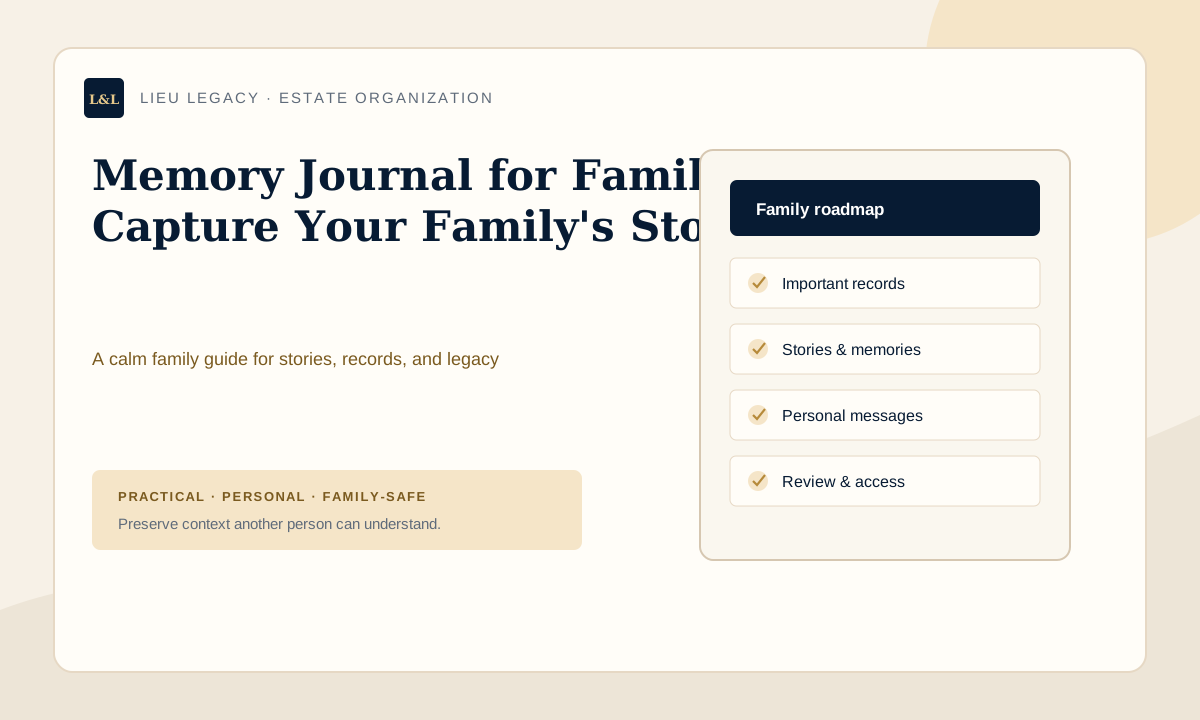
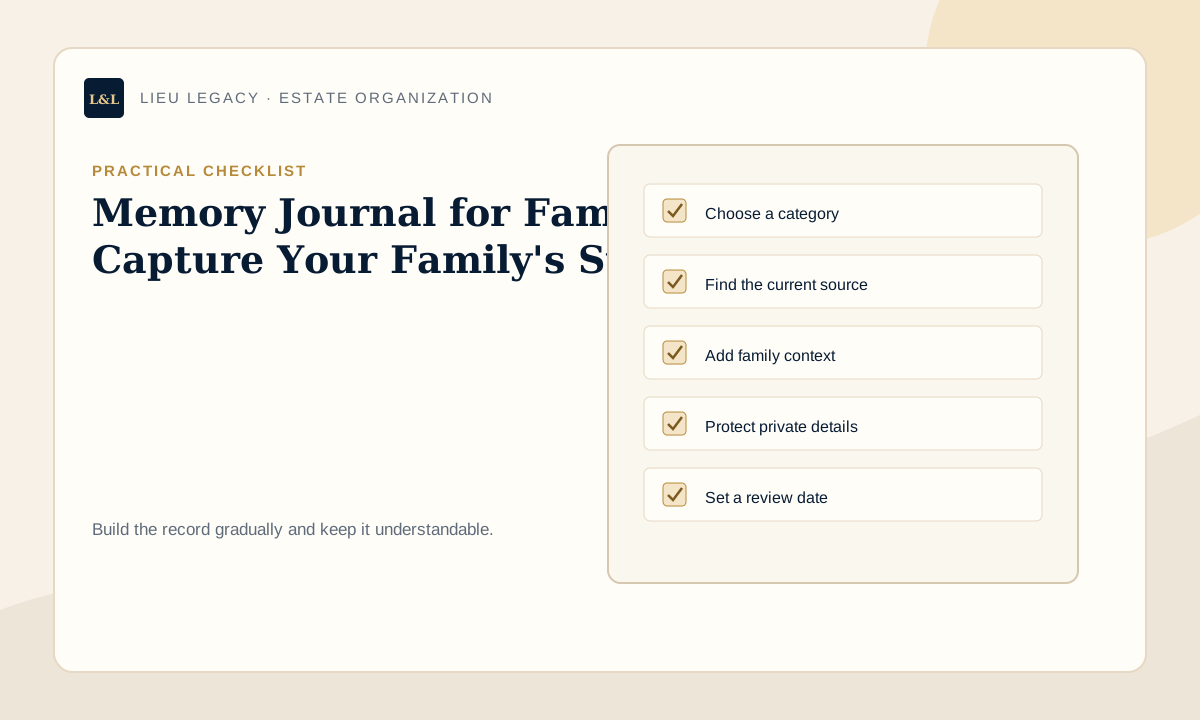
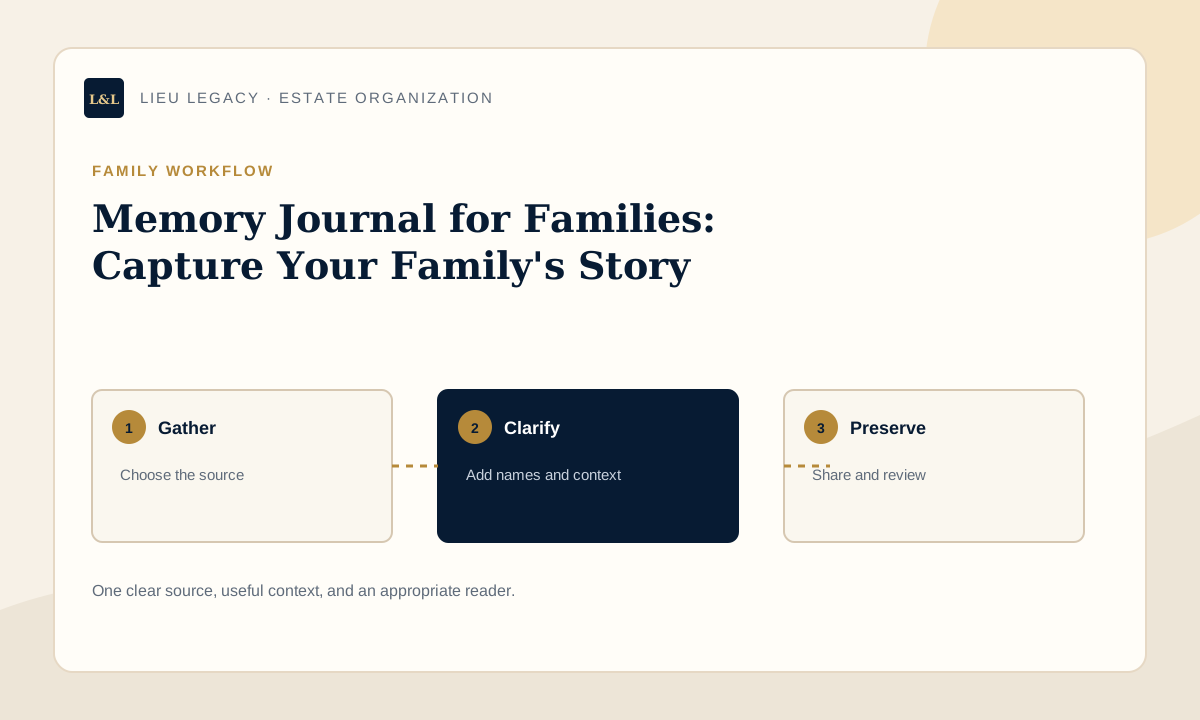
Choose one manageable category rather than trying to complete the entire project at once. Gather the current source, name the people who understand it, and write a plain-language description another family member could follow. Mark uncertain details for confirmation instead of guessing. A useful first session might organize one set of photographs, one document location, one group of story prompts, or one personal message. Finish by recording the date and the next small action. This creates momentum while keeping the work accurate and emotionally manageable. Keep a brief working note about what was reviewed, what remains open, and who can confirm the next detail so progress survives between sessions and another person can continue if needed.
- Choose one category with a clear purpose.
- Identify the current source and responsible contact.
- Use labels another person will understand.
- Separate confirmed facts from questions.
- Set one realistic next action and review date.
Examples for different families
A parent might begin with a short family overview, key contacts, and the location of important papers before adding stories or values. An adult child helping a parent may start by listening, creating a simple category list, and asking permission before organizing private material. A family historian may connect photographs with names, dates, places, and the person who can confirm each memory. Someone preparing personal information may focus on document locations and professional contacts while keeping passwords and full account details elsewhere. The format should reflect the household, the intended reader, and the information's sensitivity.
How to keep the information useful over time
Assign an owner for each major category and schedule a regular review. During the review, confirm names, contact details, locations, links, dates, and access permissions. Archive outdated versions with a clear date so they are not confused with the current record. If the project includes personal stories or messages, preserve the original voice while adding enough context for future readers. Export or back up the roadmap where appropriate, and tell at least one trusted person that it exists. A smaller current record is more useful than a large collection no one can navigate.
Privacy and access considerations
Not every family member needs every detail. Decide who only needs awareness, who may read a selected category, and who has an established role requiring broader access. Keep passwords, PINs, recovery codes, unnecessary identity numbers, and detailed security information outside a general family record. Ask permission before sharing another person's story, image, health information, or private correspondence. Review access after relationship, caregiving, employment, or household changes. When information carries legal, medical, financial, cultural, or emotional sensitivity, seek appropriate professional guidance before deciding how it should be stored or shared.
Building a reliable source index
A family roadmap is strongest when it points to authoritative sources instead of reproducing everything. For each category, record a clear name, the current physical or digital location, the person or organization responsible for it, and the date last confirmed. Distinguish an original from a copy and a verified fact from a family memory that still needs confirmation. If several people hold related information, explain their different roles. Use the same category names across the roadmap, physical folders, and digital records so a reader does not have to translate between systems. Where a professional holds the source, list the firm and contact route without copying confidential advice. Where a photograph, recording, or story has several versions, identify the preferred preservation copy and keep edits separate from the original. A reliable index saves future readers from deciding which folder, file, or recollection should be trusted.
Questions to ask during each review
A useful review asks more than whether a file still exists. Is the title understandable to someone outside the project? Is the contact still in the same role? Does the location identify the exact folder, account, box, or professional office? Has a newer version replaced the one listed? Are access permissions still appropriate? Does the note contain a private detail that should move to a more restricted system? Can the intended reader understand why this item matters and what limited next step is appropriate? Record unresolved questions with the person who can answer them and a target follow-up date. If a category no longer applies, archive it with an explanation rather than deleting context silently. End the review by asking a trusted person to locate one non-sensitive item. Their experience provides a practical measure of whether the roadmap remains clear, accessible, and useful.
How to involve family without creating pressure
Invite participation according to interest, role, and consent. One person may enjoy identifying photographs, another may confirm dates, and another may prefer to review practical contacts or document locations. Explain the purpose before assigning a task and give people permission to decline sensitive topics. Avoid treating one memory as the only correct version when relatives remember events differently; preserve attribution and uncertainty where it matters. For personal messages, values, or wishes, use language that offers context rather than controlling future choices. Agree on who maintains the shared index and how corrections are suggested. A short family conversation can identify missing names, misunderstood labels, privacy concerns, and useful stories, but the organizer should still verify factual information against the appropriate source. Respectful collaboration makes the roadmap more accurate while keeping it emotionally sustainable for the people it is intended to help.
Common mistakes to avoid
Common problems include vague labels, several conflicting versions, information understood only by the original organizer, and a project so ambitious that it is never maintained. Avoid copying sensitive material merely to make the collection feel complete. Do not present memories as verified facts when details are uncertain, and do not use future messages to assign guilt or settle conflict. Test one non-sensitive instruction with a trusted reader. Their questions will reveal missing context, unfamiliar abbreviations, and assumptions that should be clarified before the roadmap is relied upon.
How LIEU Legacy helps
LIEU Legacy gives families a private place to organize document locations, trusted contacts, account notes, household details, wishes, personal messages, stories, and executor instructions. Guided categories help turn scattered material into a roadmap another person can understand. Families can build the record gradually, choose appropriate access, and create a readable export. LIEU Legacy is an organization and communication platform—not a password manager, law firm, financial planner, healthcare provider, funeral director, emergency service, cybersecurity professional, therapist, or probate advisor.
When to speak with a professional
Use this guide for general organization. Speak with a qualified lawyer about legal documents, authority, estates, or probate; a tax or financial professional about their fields; a medical professional about health matters; and an appropriate counselor or therapist about difficult emotional or relationship concerns. Funeral questions belong with qualified local providers, cybersecurity questions with security professionals, and urgent situations with emergency services. Professional requirements vary by country, province, state, and personal situation. Keep confidential advice in its proper record and place only the useful contact, location, and family-facing context in the roadmap.
A final completeness check
Before considering the roadmap complete, confirm that it answers the intended reader's basic questions: what is included, where the current source is kept, who can provide context, and when the entry was reviewed. Check that personal stories identify the speaker, photographs identify people where possible, document notes distinguish originals from copies, and comparison notes explain the criteria used. Remove repeated material that could become inconsistent after an update. Make sure every open question has a named follow-up rather than an invented answer. Finally, verify that the chosen format can be exported or backed up appropriately and that one trusted person knows how to find it. Completion does not mean capturing everything; it means providing a clear, current, appropriately private starting point that another person can understand.
Frequently Asked Questions
What is a family memory journal?
A family memory journal is a personal or shared record where you document family stories, memories, traditions, and experiences — creating a meaningful archive that can be read and added to by family members across generations.
How is a family memory journal different from a diary?
A diary typically records daily personal thoughts and events. A family memory journal focuses on family stories, shared experiences, family history, and the moments and traditions that define your family — with future family members in mind as readers.
Can multiple family members contribute to one memory journal?
Yes. Lieu & Legacy allows you to share your family memory record with trusted family members who can view and contribute their own memories, making it a collaborative family history project.
What should I write in a family memory journal?
Write about family traditions, holiday memories, funny stories, important milestones, family home memories, stories about grandparents and parents, and any family history you want to preserve. Use our guided prompts if you are not sure where to start.
How often should I add to my family memory journal?
There is no required schedule. Many people add entries after family gatherings, during quiet moments of reflection, or when prompted by a memory. Even monthly or quarterly additions will build a meaningful family record over time.
Create a private roadmap your family can actually follow.
LIEU Legacy helps you organize documents, contacts, account notes, wishes, household details, access notes, personal messages, and executor instructions in one private family vault.
Start My Family VaultDisclaimer: LIEU Legacy is not a law firm and does not provide legal, tax, financial, medical, emergency, cybersecurity, funeral, grief counseling, or probate advice. This article is for general organization and education only. For advice specific to your situation, speak with a qualified professional.