Executor Resource Center: Guides, Checklists, and Templates
Families often hear about worksheets, templates, checklists, and resource guides for estate organization, executor preparation, and family preparedness. The challenge is knowing which resource fits the need and how to use it effectively. This article provides a practical resource center for executor resource center. It is written for families gathering executor information and preparation resources and focuses on organization and education, not legal or professional advice. A well-designed resource center helps families capture useful information in one place, identify gaps, and share context with the right people. The goal is clarity and completeness: a resource that families can actually use and maintain over time.
What this resource center is for
This resource center helps families providing a centralized hub of executor resources for families. It is designed to be practical, clear, and family-safe. Use it as a starting point to gather information, identify what you have and what you still need, and create a reference that loved ones or professionals can understand.
The resource center is organized into categories that cover the most common areas families need to document. Not every section will apply to every family. Skip what does not fit and add custom categories where helpful. The goal is a useful reference, not a perfect document.
What to include in this executor resource center
Every useful entry answers four questions: what is this, where is the current source, who can help, and when was it last checked? The categories below provide a practical starting point. Remove what does not apply and add household-specific details. If information is unknown, mark it for confirmation rather than guessing.
- Executor checklists and worksheets: add the current source, responsible contact, and date last reviewed.
- Executor information templates: add the current source, responsible contact, and date last reviewed.
- Document and contact organization guides: add the current source, responsible contact, and date last reviewed.
- Professional advisor directory tips: add the current source, responsible contact, and date last reviewed.
- Executor glossary of terms: add the current source, responsible contact, and date last reviewed.
- Digital vault alternative guides: add the current source, responsible contact, and date last reviewed.
- Regional executor resources: add the current source, responsible contact, and date last reviewed.
- LIEU Legacy executor roadmap: add the current source, responsible contact, and date last reviewed.
How to use this resource center
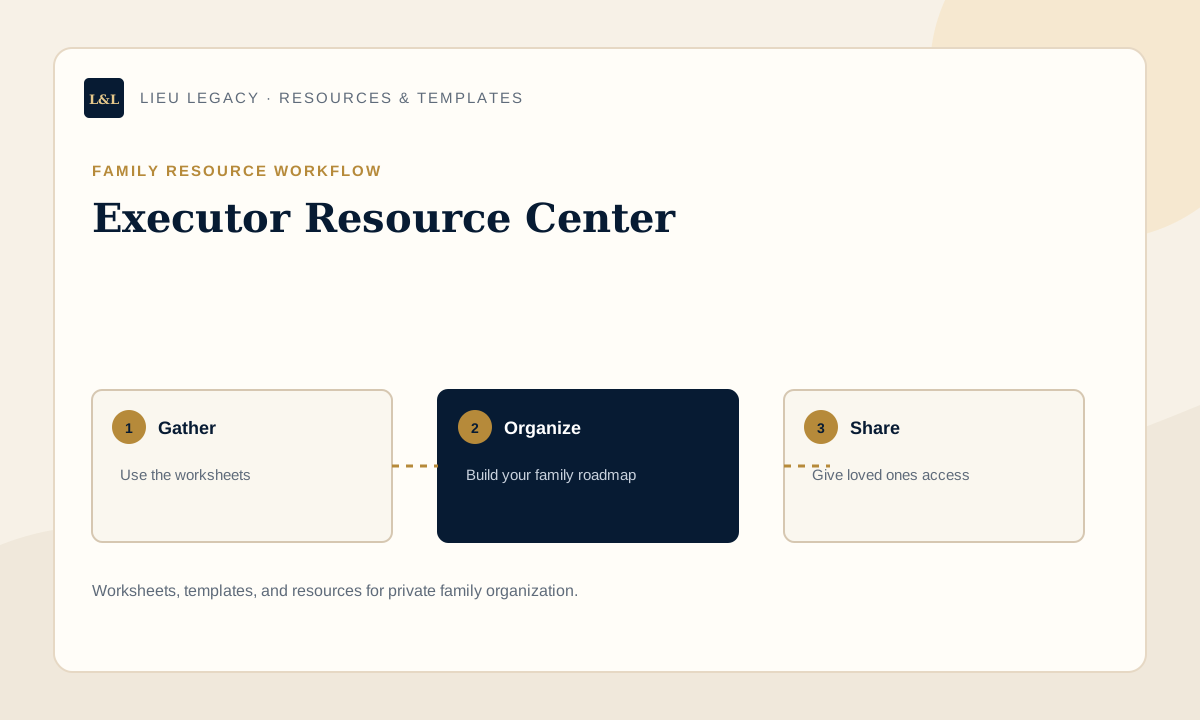
Start by reviewing each category and noting what information you already have. Do not try to complete everything in one sitting. Begin with the sections most relevant to your household. Walk through existing folders, digital files, account portals, and contact lists. Write down what you find and note where the authoritative source is kept.
After completing an initial pass, review for gaps and uncertainties. Mark items that need confirmation or professional input. Then share the resource center with a trusted person and ask if they can follow one non-sensitive instruction. Their questions will reveal where clarity is needed. Finally, set a regular review schedule to keep the information current.
- Review each category and note what you already have.
- Do not try to complete everything at once.
- Mark items that need confirmation or professional input.
- Test the resource with a trusted person.
- Set a regular review and update schedule.
- Update after major life events or changes.
Paper resource, spreadsheet, or private vault?
A paper resource center is familiar and requires no technology, but it can become outdated, difficult to search, and unavailable when away from home. A spreadsheet is flexible and searchable but may lack privacy controls and can be fragile if not backed up properly. A private digital vault offers guided organization, access controls, and easier updates, but depends on recovery planning and family comfort with technology.
Choose the format that fits your family's needs. A worksheet can be completed on paper and later moved to a digital system. A digital vault can generate a printable summary. The best approach is one that the family will actually use and maintain over time.
| Option | Works best for | Watch for |
|---|---|---|
| Paper worksheet | Familiar, no-tech reference | Outdated copies and limited sharing |
| Spreadsheet | Flexible digital organization | Privacy, backups, and access control |
| Private digital vault | Guided categories and family access | Recovery planning and product terms |
Practical examples for using this resource center
A homeowner might use the resource to connect a property record location with the mortgage contact, insurer, utility providers, and the person who knows the maintenance history. An adult child helping a parent might begin with advisor names, policy locations, recurring household services, and questions that still need professional confirmation. A business owner might add key business contacts and continuity notes while keeping credentials, confidential agreements, and professional advice in their proper systems.
The resource is also useful as a conversation guide. A family can choose one category during a monthly check-in, confirm the current source, and decide who needs awareness or access. The completed entry should be specific enough for another person to follow without copying every underlying record. Examples should be adapted to the household rather than treated as universal instructions.
For a simple test, choose one low-risk task such as finding the insurance broker's phone number or the location of a current property policy. Give the resource to an appropriate trusted person without extra explanation and note where they hesitate. Improve labels, contacts, or location language based on that feedback. Repeat with a different category at the next review so usefulness is tested gradually rather than assumed.
How to check whether the resource center is genuinely useful
Review the finished resource from the perspective of a person who did not create it. Can that reader identify the current source, understand the contact's role, distinguish confirmed facts from open questions, and see when the entry was reviewed? Replace vague phrases such as “usual folder” or “our advisor” with a precise location and named role. Remove obsolete duplicates and explain abbreviations the family may not share.
Then check privacy and maintenance. Confirm that passwords, security codes, and unnecessary identity numbers are absent. Make sure access reflects the reader's role and that an export or backup is available where appropriate. Assign one person to maintain each major category and schedule the next review. A resource is complete enough when it supports a clear next step; it does not need to contain every detail the family owns.
Finally, check whether every external link, phone number, and professional relationship is still current. Confirm that related papers use the same category name as the roadmap and that the newest version is clearly identified. If the resource contains regional information, verify the location and date and preserve the local-professional disclaimer. Quality comes from traceable sources, careful limits, and routine review—not from filling every blank.
Use a brief completion record at the end of the resource: who reviewed it, which categories were checked, what remains unresolved, and the next review date. Open questions should name the person or professional who can confirm them. This prevents an unfinished item from looking like a verified fact and helps the next reviewer continue rather than restart. When a category no longer applies, archive it with a date instead of silently deleting context another family member may still recognize.
Common mistakes to avoid
The most common mistake is treating a resource center as a one-time project. Information changes as accounts, relationships, and property evolve. Another mistake is overloading the resource with unnecessary detail or sensitive data that does not belong in a general reference. Keep it focused on context and location, not secrets.
- Treating the resource as a one-time project without reviewing it.
- Including passwords, PINs, or security codes in general notes.
- Writing vague locations instead of specific, clear references.
- Forgetting to share the resource's existence with trusted people.
- Using unfamiliar terms or abbreviations that confuse readers.
- Creating a resource that only the original organizer understands.
How LIEU Legacy helps
LIEU Legacy gives families a guided private vault for document locations, trusted contacts, account notes, household details, wishes, and executor instructions. Instead of managing separate worksheets, spreadsheets, or paper binders, families can organize everything in one maintained roadmap with clear categories and access controls.
The platform supports organization and communication rather than professional decision-making. Families can build their roadmap in manageable sessions, choose appropriate access for each trusted person, and export a readable reference at any time. LIEU Legacy is not a law firm, financial planner, or password manager. Its role is to make family information clearer and more useful before loved ones need it.
When to speak with a professional
Worksheets, templates, checklists, and resource guides help families organize information but do not replace qualified professional advice. A lawyer can address legal documents, authority, and jurisdiction-specific requirements. An accountant can help with tax records and financial organization. A financial professional can advise on planning decisions. An insurance professional can review coverage questions. Regional requirements vary by province, state, and territory.
For executor resource center, consult a professional whenever your questions move from "where is this information?" to "what should we decide, sign, or do?" Professionals can advise on legal documents, tax considerations, jurisdiction-specific rules, and formal authority. Keep professional advice in its proper location and reference it in your resource center rather than reproducing it.
Frequently asked questions
What is a executor resource center?+
It is a practical tool that helps families organize information, identify gaps, and share context with loved ones or professionals. It records contacts, document locations, account references, and personal wishes.
How long does it take to complete?+
Most families complete an initial pass in one to two hours. The key is to start with the most relevant sections and add details over time.
Should I include passwords in this resource?+
No. Passwords, PINs, security codes, and full account numbers belong in a dedicated password manager. This resource should record context and location information only.
How often should I update this resource?+
Review it at least annually and after major life events such as a move, marriage, divorce, new child, job change, or death of a family member.
Does a executor resource center replace professional advice?+
No. It is an organization and education tool. It does not replace legal advice, a will, financial planning, medical advice, or consultation with qualified professionals.
Create a private roadmap your family can actually follow.
LIEU Legacy helps you organize documents, contacts, account notes, wishes, household details, access notes, personal messages, and executor instructions in one private family vault.
Start My Family VaultContinue your family roadmap
Disclaimer: LIEU Legacy is not a law firm and does not provide legal, tax, financial, medical, emergency, cybersecurity, funeral, grief counseling, or probate advice. This article is for general organization and education only. For advice specific to your situation, speak with a qualified professional.