Family Information Access Control: A Practical Framework
Families today manage more information than ever before: digital accounts, financial portals, document storage, subscription services, and private notes spread across multiple platforms. Understanding how to protect that information while keeping it accessible to loved ones is a practical challenge. This article explains implementing a practical access control framework for family information. It is written for families designing an access control system for practical records and focuses on information privacy and access organization, not cybersecurity advice or legal compliance. A thoughtful approach to family information access control helps families share useful context, protect sensitive data, and ensure the right people can find what they need. The goal is clarity, not complexity: practical boundaries that respect both privacy and the need for loved ones to understand household information.
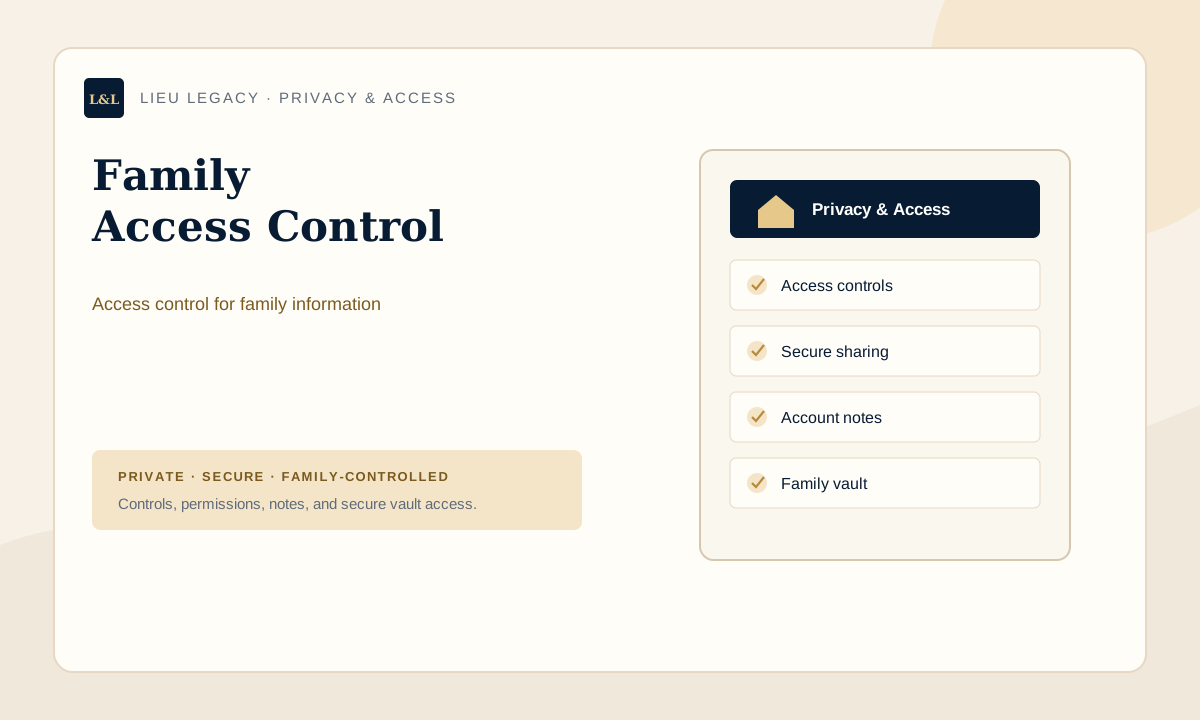
What family information access control means for families
Privacy in this context is about control: deciding which information is shared, with whom, for what purpose, and for how long. Access is about practicality: making sure the right people can reach important information without unnecessary barriers. Together they form the foundation of responsible family information management. A family that organizes both privacy and access creates a system that reduces dependence on any single person's knowledge.
The right balance depends on the family's composition, technology comfort, and the sensitivity of the information involved. A small family with simple finances may need minimal access controls. A larger family with multiple properties, accounts, and roles may benefit from more structured permissions. Begin with the most essential categories—household contacts, document locations, account references—and build outward.
Key family information access control features to understand
Privacy features protect information from unauthorized access while giving families control over who can view or share each category. Understanding the basics helps families make informed decisions about which tools and practices to adopt. The features below form a practical checklist for evaluating any privacy and access system.
- Information classification levels: evaluate how this feature applies to your family's needs and whether it aligns with your privacy expectations.
- Role and responsibility mapping: evaluate how this feature applies to your family's needs and whether it aligns with your privacy expectations.
- Permission assignment matrix: evaluate how this feature applies to your family's needs and whether it aligns with your privacy expectations.
- Access review process: evaluate how this feature applies to your family's needs and whether it aligns with your privacy expectations.
- Emergency access procedures: evaluate how this feature applies to your family's needs and whether it aligns with your privacy expectations.
- Access revocation workflow: evaluate how this feature applies to your family's needs and whether it aligns with your privacy expectations.
- Audit and activity logging: evaluate how this feature applies to your family's needs and whether it aligns with your privacy expectations.
- Documentation and communication: evaluate how this feature applies to your family's needs and whether it aligns with your privacy expectations.
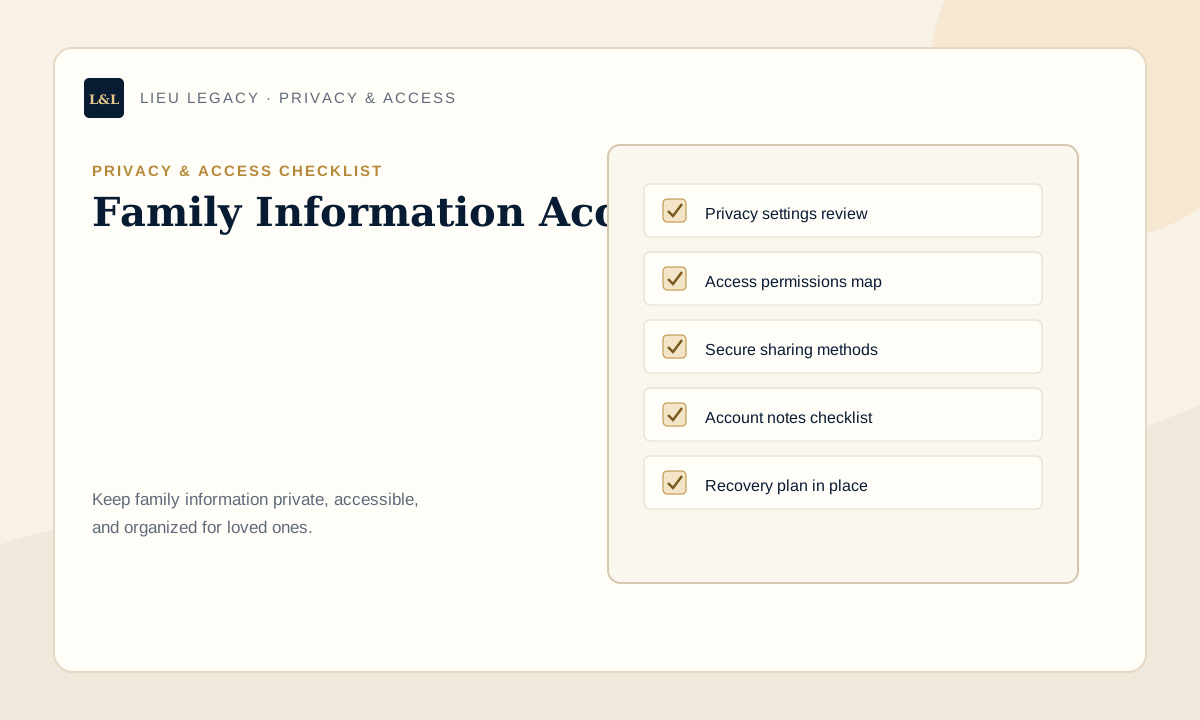
How to build a family privacy and access plan step by step
Start with an information inventory. List every category of household and account information your family manages. Next, assess who currently knows about each category and who might need access in different scenarios. Then design access levels: some information may be shared broadly (household contacts), while other categories require restricted access (account references, private notes).
Document your access decisions in plain language. Test the system with a trusted person by asking them to locate a non-sensitive piece of information. Their questions will reveal gaps in your instructions. Finally, set a recurring review date. Privacy and access needs change as family structures, accounts, and technology evolve.
- Inventory all information categories before setting permissions.
- Assess who needs access and why before granting it.
- Design access levels that match sensitivity and need.
- Keep credentials and high-risk data in dedicated systems.
- Document decisions in clear, plain language.
- Test access with a trusted person and adjust.
- Review and update at least annually and after major changes.
Account notes: what to record and what to protect
Account notes help loved ones understand which services exist, who manages them, and how to reach support. They should record the institution or service name, account purpose, document or statement location, support contact, and a reference to the password manager where credentials are stored. What they should never contain are passwords, PINs, recovery codes, security answers, or full account numbers.
Access controls organize information sharing; they do not create legal authority or replace formal designations or professional advice. Treat account notes as a directory of context, not a store of secrets. The goal is to help a trusted person contact the right institution and locate the right records without exposing the credentials needed to access those accounts directly.
How to classify family information by sensitivity
A practical privacy plan becomes easier when information is grouped by sensitivity. Public or low-risk information may include service-provider names and general household contacts. Family-only information may include document locations, property context, and routine instructions. Restricted information may include identity records, detailed financial references, private messages, or information governed by professional confidentiality. Credentials and recovery secrets should remain in dedicated secure systems rather than the family roadmap.
Label categories in plain language and decide what each label permits. For example, “family reference” might allow selected adult relatives to view a utility contact, while “restricted” limits a tax-document location to the owner and an established representative. Classification should reduce unnecessary exposure without making ordinary information impossible to find. Review labels whenever the information, reader, or purpose changes.
Record the reason for a classification so future reviewers understand the choice. Information can become more or less sensitive over time: an old service contact may no longer matter, while a new caregiving note may require tighter access. Avoid copying the same detail into several categories, because duplicates are difficult to revoke and may conflict after an update. Keep one authoritative entry and use references where another section needs context.
How to review access without creating confusion
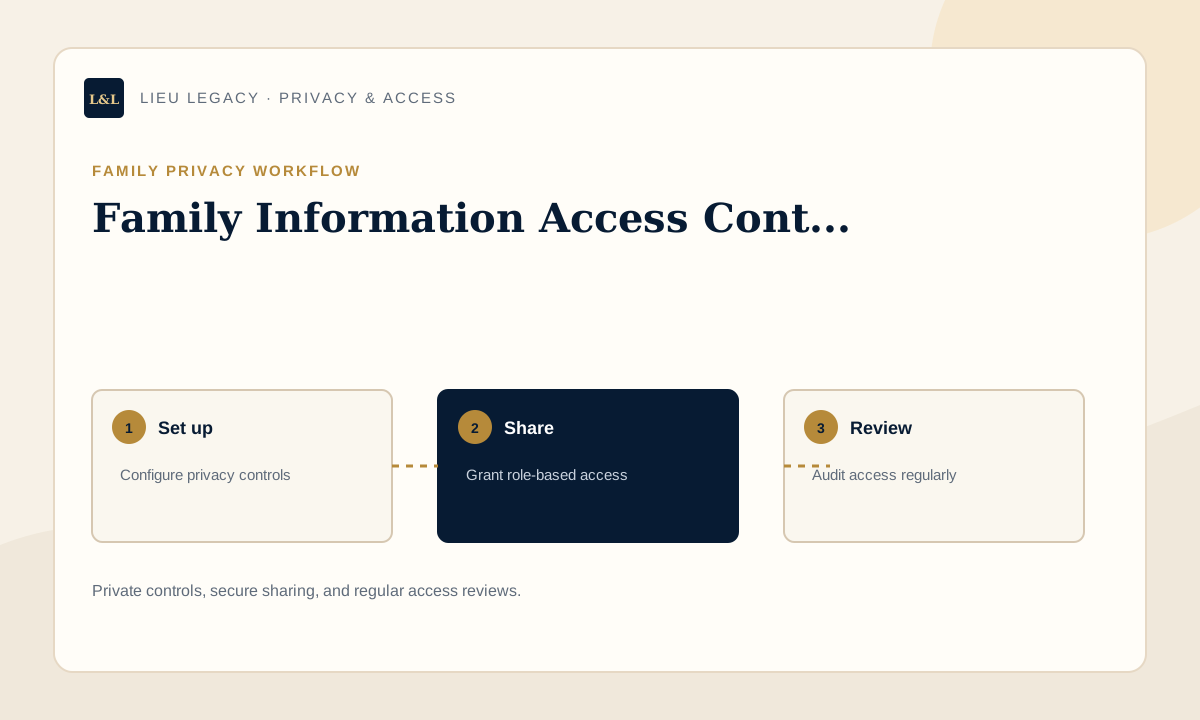
Use a simple access register that names the person, their role, the categories they can see, the reason for access, and the date last confirmed. Review the register with the roadmap rather than relying on memory. Remove outdated access promptly, especially after changes in employment, professional relationships, caregiving roles, household membership, or family responsibilities. When possible, notify people when their access or expected role changes so the system does not create surprise.
Test both ordinary and recovery access with non-sensitive examples. Confirm that a trusted person can find an allowed category, cannot see a restricted category, and knows whom to contact if access fails. Document the recovery process without placing the recovery secret inside the same roadmap. A short, repeated test is more useful than an elaborate access plan that has never been tried.
Common privacy and access mistakes to avoid
The most common mistake is treating all information as equally sensitive. Blanket privacy can lock out the very people who need practical context. Blanket access can expose unnecessary private data. Another frequent error is designing the system only for the current household structure without planning for changes—new members, departing members, aging parents, or adult children who may need different access.
- Storing passwords with account notes instead of in a password manager.
- Giving everyone the same access regardless of role or need.
- Creating a system that only the primary organizer understands.
- Forgetting to revoke access after role or relationship changes.
- Using unencrypted channels like email for sensitive information.
- Setting up access controls but never testing or reviewing them.
When to speak with a professional
Privacy, security, and access questions often involve product capabilities, legal obligations, and personal judgment. A privacy or security professional can advise on encryption standards and data handling. A lawyer can address legal duties, confidentiality requirements, and document retention rules. An accountant or financial planner can help with account organization and beneficiary designations. A technology advisor may help evaluate platform options. This article organizes practical context to make those conversations more productive, but it cannot replace qualified professional advice.
For family information access control, consult a professional whenever the question moves from "how do I organize this information?" to "what are my legal obligations, what security standards apply, or what formal authority is needed?" Professionals can advise on jurisdiction-specific privacy laws, data retention requirements, encryption standards, and the interaction between family access plans and legal documents.
How LIEU Legacy helps families manage privacy and access
LIEU Legacy gives families a private, organized space for document locations, trusted contacts, account notes, wishes, and household information—all with role-based access controls. Instead of mixing sensitive context with everyday files, LIEU Legacy separates organizational information into purpose-built categories with clear privacy boundaries.
Families can assign different access levels to different members, set up emergency access paths, maintain account notes without storing credentials, and export a readable roadmap. The platform supports organization and communication rather than professional security or legal decision-making. LIEU Legacy is not a password manager, law firm, cybersecurity provider, or compliance tool. Its role is to make family information clearer, more private, and more accessible to the right people.
Frequently asked questions
What does family information access control mean for families?+
It means organizing information with appropriate privacy boundaries and access levels so the right people can find what they need without exposing unnecessary sensitive data.
Should passwords be stored in account notes?+
No. Passwords, PINs, recovery codes, and security answers belong in a dedicated password manager. Account notes should provide context and institution contacts only.
How do I decide who gets access to what?+
Match access to practical need and role. A spouse may need broader access than an adult child, and a neighbour or contractor needs only relevant sections. Review access when roles or relationships change.
How often should privacy and access settings be reviewed?+
Review at least annually and after major life events: marriage, separation, new child, aging parent move, job change, new home, or change in trusted contacts.
Does family information access control replace legal or cybersecurity advice?+
No. It is an organization and communication approach. It does not replace legal advice, cybersecurity guidance, password managers, formal confidentiality obligations, or professional compliance requirements.
Create a private roadmap your family can actually follow.
LIEU Legacy helps you organize documents, contacts, account notes, wishes, household details, access notes, personal messages, and executor instructions in one private family vault.
Start My Family VaultContinue your family roadmap
Disclaimer: LIEU Legacy is not a law firm and does not provide legal, tax, financial, medical, emergency, cybersecurity, funeral, grief counseling, or probate advice. This article is for general organization and education only. For advice specific to your situation, speak with a qualified professional.