Values and Wishes Checklist for Family Planning
Families often organize practical records yet leave personal preferences and messages in scattered conversations, old notebooks, or one person's memory. That can make an already sensitive subject harder to understand. This guide explains documenting values, traditions, preferences, and family messages. It is written for people who want their roadmap to include more than documents and uses calm, respectful language without treating personal notes as legal, medical, funeral, financial, or counseling advice. A useful values and wishes checklist is a communication roadmap. It identifies what you want loved ones to understand, where related records are kept, who can answer professional questions, and when the note was last reviewed. It does not need to predict every circumstance or control every decision. The purpose is to preserve useful context, reduce ambiguity, and give family members permission to combine your preferences with reality, professional guidance, and care for one another.
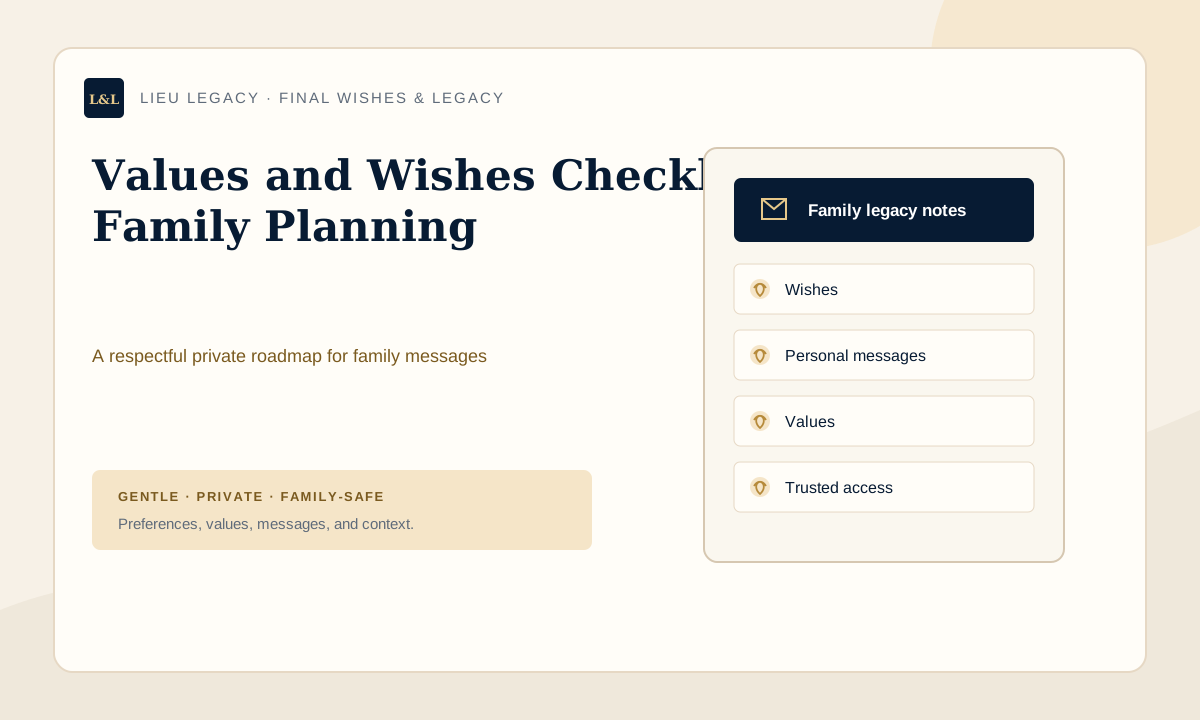
What a values and wishes checklist means
The value of a wishes or legacy note is context. It can explain why a tradition matters, which people hold important information, what kind of gathering feels appropriate, or what message you hope a loved one carries forward. Unlike a vague comment made years earlier, a dated and organized note gives the family a source they can read carefully and discuss together.
The note should also show its limits. Some preferences may depend on law, professional guidance, cost, timing, provider availability, or circumstances no one can predict. Use phrases such as “my preference is,” “if practical,” and “please confirm with” rather than language that implies every idea must be followed regardless of context. Clarity is strongest when it is paired with compassion and flexibility.
What to include in a values and wishes checklist
Begin with the information that would genuinely help the intended reader. Each section should answer a simple question: what do I want to communicate, where is the authoritative record, who can provide qualified guidance, and when did I last review this? The checklist below is a starting point, not a demand to complete every category.
- Core values: write a concise note, identify any related contact or record location, and make clear whether it is a preference, confirmed arrangement, or question.
- Family traditions: write a concise note, identify any related contact or record location, and make clear whether it is a preference, confirmed arrangement, or question.
- Lessons and hopes: write a concise note, identify any related contact or record location, and make clear whether it is a preference, confirmed arrangement, or question.
- Cultural or faith context: write a concise note, identify any related contact or record location, and make clear whether it is a preference, confirmed arrangement, or question.
- Personal preferences: write a concise note, identify any related contact or record location, and make clear whether it is a preference, confirmed arrangement, or question.
- Meaningful stories: write a concise note, identify any related contact or record location, and make clear whether it is a preference, confirmed arrangement, or question.
- Messages for individuals: write a concise note, identify any related contact or record location, and make clear whether it is a preference, confirmed arrangement, or question.
- Review and privacy choices: write a concise note, identify any related contact or record location, and make clear whether it is a preference, confirmed arrangement, or question.
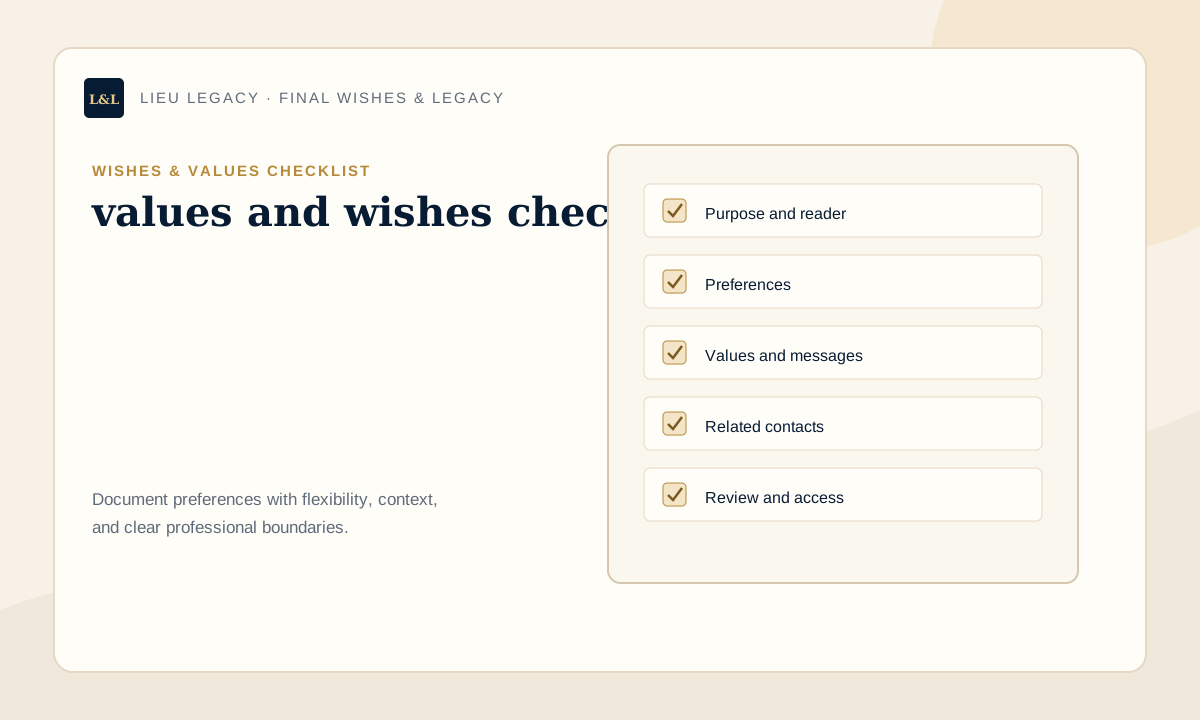
How to write the notes clearly and respectfully
Start by naming the audience and purpose. A note for adult children may sound different from a practical guide for an executor. Use ordinary language, short sections, and direct headings. Separate personal messages from task lists so affection is not buried in administration. If a topic feels uncertain, write what matters about it rather than inventing precise instructions. “A simple gathering focused on family stories” may communicate more than a long, rigid script.
Draft in more than one sitting. On the first pass, capture ideas. On the second, remove repetition, blame, and assumptions. On the third, check names, contacts, locations, and dates. Ask whether each instruction is understandable to someone who does not share your shorthand. Where possible, discuss important wishes during life so the written roadmap confirms a conversation rather than arriving as a surprise.
- State who the note is for and what it is meant to do.
- Label preferences separately from formal documents.
- Use flexible, plain-language sentences.
- Add contacts and record locations without copying secrets.
- Remove guilt, pressure, and unresolved conflict from task notes.
- Date the note and schedule a regular review.
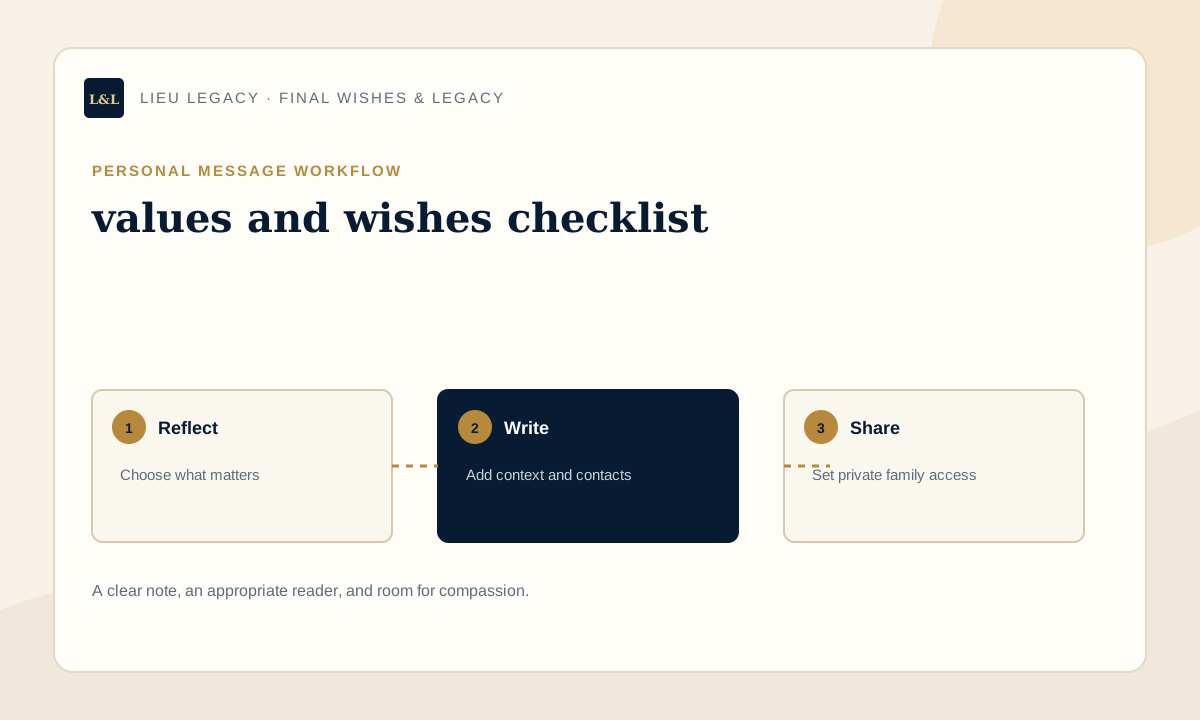
Paper notes, digital vault, or a hybrid roadmap?
Paper can feel personal and tangible. Handwritten letters may carry emotional meaning that a typed form does not. Paper can also be misplaced, damaged, copied without context, or left behind after preferences change. A digital vault is easier to organize, revise, and share with selected people, but it requires thoughtful privacy, recovery, and export planning. A hybrid approach can preserve handwritten originals while using a digital roadmap to identify their locations and connect them with current practical notes.
Choose according to the message and the reader. A private letter may belong in a sealed envelope, while a contact map benefits from easy updates. A checklist may be digital and exportable, while a memory book remains physical. Whatever the format, give the family one clear index so they do not have to decide which of several conflicting copies is current.
| Option | Works best for | Watch for |
|---|---|---|
| Paper notes | Personal letters and people who value a physical keepsake | Loss, damage, old copies, and limited access |
| Digital vault | Organized updates, search, and selected sharing | Privacy, recovery, and export settings |
| Hybrid roadmap | Physical messages plus current locations and instructions | Keeping the index synchronized with originals |
Privacy and access for family messages
Personal messages may be more sensitive than document lists. Decide whether a note is meant to be read now, shared with one person, or made available later. Not every trusted contact should receive every message. Separate role-based instructions from private letters, and ask before naming someone for a responsibility. A family roadmap can record that a message exists and where it is held without exposing its contents broadly.
Plan for access without placing passwords or recovery codes in the note. Use an appropriate password manager or secure recovery process. Review permissions after relationship or role changes. If a message contains highly sensitive health, legal, financial, or interpersonal information, consider whether it belongs in the family roadmap at all and ask a qualified professional about the right handling.
What not to include in general wishes notes
Avoid passwords, PINs, recovery codes, full account numbers, unnecessary identification numbers, or detailed security information. Do not use a future message to reveal private information about another person, settle old disputes, assign guilt, or demand that loved ones ignore their own needs. Separate confidential professional advice and detailed medical records from a general family note.
Values notes should guide communication without pressuring loved ones or claiming formal legal effect. Avoid promises that a preference is guaranteed or legally binding. If something requires formal authority, provider confirmation, healthcare guidance, counseling, or legal advice, identify the relevant document or professional instead. A restrained note that points to the right source is more reliable than a sweeping instruction outside the writer's expertise.
Common final-wishes and legacy mistakes to avoid
The most common problem is ambiguity: a family remembers several different conversations and cannot tell which reflected the current preference. Other notes become difficult because they mix emotional messages, legal assumptions, and practical tasks in one long page. Some writers create such a detailed script that loved ones feel they have failed if circumstances require a change. A useful roadmap is dated, organized by purpose, and generous about reasonable adaptation.
- Leaving several versions without identifying the current note.
- Calling a personal preference a legal instruction.
- Using family shorthand that another reader cannot interpret.
- Combining private letters and shared task lists without access boundaries.
- Writing rigid demands without acknowledging changing circumstances.
- Finishing a draft but never telling a trusted person it exists.
How LIEU Legacy helps
LIEU Legacy gives families a private place to organize document locations, contacts, account notes, household details, access notes, final wishes, personal messages, and executor instructions. Practical records and values-based notes can remain distinct while still belonging to one understandable roadmap. Each section can explain what exists, who should know, where related information is held, and what needs review.
The platform supports organization and communication, not professional decision-making. Families can write in manageable sessions, choose appropriate access, and create an exportable reference. LIEU Legacy is not a law firm, funeral director, doctor, therapist, emergency service, password manager, cybersecurity professional, or probate advisor. Its role is a clearer starting point for respectful family communication.
When to speak with a professional
Personal wishes can raise questions that need qualified judgment. A lawyer can address wills, directives, authority, and local legal requirements. A funeral director can explain available arrangements and provider processes. Healthcare questions belong with medical professionals, financial decisions with qualified financial or tax professionals, emotional or relationship concerns with an appropriate therapist or counselor, and urgent situations with emergency services. Organized notes can make those conversations clearer, but they cannot replace them.
For values and wishes checklist, ask for help whenever the question changes from “what do I want to communicate?” to “what is legally valid, medically appropriate, financially workable, contractually available, or emotionally safe?” Professionals can explain formal documents, provider requirements, local rules, and support options. Keep confidential advice in its proper record, then place only the useful contact, location, review date, and family-facing context in the roadmap.
Frequently asked questions
What should a values and wishes checklist include?+
Include a clear purpose, the most meaningful preferences or messages, related contacts and document locations, flexible next-step notes, and a date. Keep secrets and unnecessary private details elsewhere.
Is a values and wishes checklist legally binding?+
Not automatically. Personal wishes notes and templates may not have the effect of a properly prepared legal document. Ask a qualified lawyer about requirements and documents in your jurisdiction.
Who should have access to final wishes or legacy messages?+
Choose access according to the message and the person's role. Some notes may be shared now, some with one trusted person, and others later. Review access after relationship or role changes.
How often should wishes and legacy notes be updated?+
Review them at least annually and after major family, relationship, health, faith, residence, provider, or planning changes. Date each version and identify the current note.
Does a values and wishes checklist replace a will or professional advice?+
No. It supports organization and family communication. It does not replace a will, lawyer, funeral director, doctor, therapist, emergency service, financial professional, password manager, or probate counsel.
Create a private roadmap your family can actually follow.
LIEU Legacy helps you organize documents, contacts, account notes, wishes, household details, access notes, personal messages, and executor instructions in one private family vault.
Start My Family VaultContinue your family roadmap
Disclaimer: LIEU Legacy is not a law firm and does not provide legal, tax, financial, medical, emergency, cybersecurity, funeral, grief counseling, or probate advice. This article is for general organization and education only. For advice specific to your situation, speak with a qualified professional.